Walk a site with a facility manager after a break‑in, and you hear the same story. The cameras gave them a great video of the problem. The alarm notified dispatch quickly. Then they point to the wide, inviting gap where a gate should have stopped everything. Perimeter hardware is where security either holds or it doesn’t, and commercial security gates that mesh cleanly with the access control system do more than look tough. They widen the window for detection, tighten the window for response, and save crews time when the day is supposed to run like clockwork.
This is a practical guide to the gates that actually play nice with card readers, keypads, intercoms, and cloud controllers, the trade‑offs behind each style, and a few field notes so you don’t learn the hard way in February when the motor freezes and the delivery queue doubles back to the street.
What “works with access control” really means
Plenty of gates open and close. Far fewer talk to the rest of your system. When a gate integrates well, you get a predictable sequence: credential presented, controller makes a decision, operator moves on command, position confirms, events log, alarm zones arm or shunt, and life goes on. When it doesn’t integrate, you get tailgating, stuck relays, confused drivers, and a night full of nuisance alarms.
On a real site, integration boils down to a short list of concrete points. The gate operator or lock accepts a relay or OSDP signal from your controller, it reports open and closed states through limit switches or sensors, it pairs with safety devices so you don’t create a liability, and it fails predictably during power or network hiccups. Good integration also leaves room for schedules, temporary codes, and remote overrides without copiloting two separate systems.
The line‑up: fixed, folding, sliding, and scissor styles
The phrase commercial security gates covers a lot of ground. On the heavy end, you have cantilever sliders and swing gates with beefy motors and photo eyes. On the flexible end, you have expanding security gates, sometimes called accordion security gates or scissor security gates, that collapse to the side and lock where you want them. Each has a sweet spot.
A steel sliding gate across a distribution yard sends a clear message to a 14‑foot box truck. It ties into a card reader pedestal, intercom, and loop detectors. It’s built for daily duty and weather. The drawback is foundation work, clear backrun, and maintenance on wheels or tracks.
Swing gates often hit a better price point and install quickly, but they need room to swing, and wind loads can turn a docile panel into a sail. You learn to spec a stout operator, use magnetic locks or hold‑open settings wisely, and verify the hinge posts are set in concrete that won’t move when frost heaves.
Inside a building or across loading dock bays, expanding security gates earn their keep. The accordion action lets you secure a wide span without building a wall, and a single person can unlock and retract the gate to move pallets or foot traffic. In many businesses, these become the go‑to security gates for business hours when you want partial access control, like keeping shoppers away from a stock corridor while the store is open.
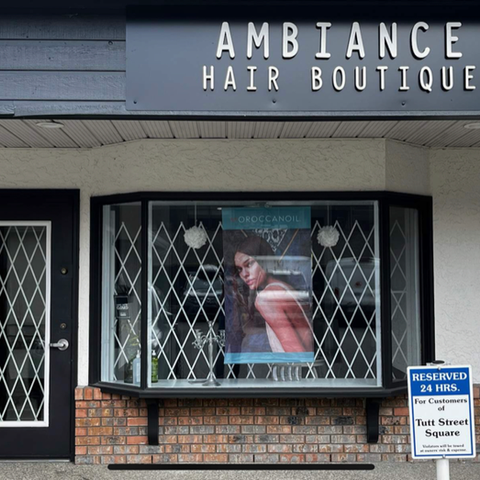
If the term scissor security gates makes you think of the familiar diamond lattice that folds sideways, you’re on the right track. The lattice doesn’t stop a vehicle, but it will slow a casual intruder and, with the right locks and anchors, stand up surprisingly well to prying. The architecture also invites visibility and airflow. You see this in garden centers, airport concourses after hours, and service corridors in arenas.
How the electronics meet the metal
From the access control side, a gate is just a door with a stubborn personality. You still have an input, an output, and an expectation of feedback. The difference lies in the forces involved and the distances covered.
A conventional door strike pops with less than 20 pounds of force and moves a latch bolt. A sliding gate can weigh 900 pounds, and the motor consumes several amps on startup. That gap between electronics and mechanics is bridged by the operator or, for manual gates, by an electric lock plus a supervised contact.
Here’s the usual data path. The user presents a card, pin, fob, or mobile credential. The controller issues a “momentary open” through a dry contact. The gate operator reads that contact, checks safety inputs, and energizes the motor. Limit switches, reed contacts, or encoders confirm the open and closed positions back to the controller. If anything fails, a fault relay can alert the panel that something needs human eyes.
For accordion security gates, the recipe is simpler. There’s no motor, so you mount an electromagnetic lock at the meeting stile or use a rugged padlock keeper that a solenoid latch can release. A tethered door contact reports state. Some vendors offer a kit that positions a maglock in a steel housing at the head, with wiring protected in a conduit to deter tampering. The contact goes to the panel, the maglock to a power supply controlled by the panel, and you’ve turned a manual scissor gate into a controlled barrier that logs entries like any door.
Safety isn’t optional
If you motorize anything that can pinch, crush, or knock over the careless, you add safety. This isn’t red tape, it’s physics and liability. I’ve watched a 16‑foot swing gate catch a crosswind and shove a contractor back three steps. That was with a properly tuned operator.
Photoelectric eyes, edge sensors on the leading edge, and vehicle loops do the quiet work. Photo eyes cut power when a person breaks the beam. Edges sense contact and reverse a closing movement. In northern climates, heated loops help you detect vehicles even when snow tries to insulate the pavement. The more public the site, the more layers you add.
Keep an eye on fail modes. For example, magnetic locks on accordion gates should release on fire alarm to avoid trapping occupants. A well‑written fire plan calls out which gates fail safe and which fail secure. Exterior vehicle gates often fail secure when power dies, then a manual release lets emergency services in. Document who holds the keys or padlock combos and make sure the fire department knows the plan.
The case for expanding security gates inside the perimeter
Most teams see gates as a single perimeter line. That’s a miss. Layered security works. If someone slips past the vehicle gate or an employee props a door, interior barriers slow movement and isolate valuable spaces.
This is where expanding security gates shine. You can close off a stack of roll‑up doors after shipping calls it a day, or partition a retail floor in minutes to separate high‑shrink goods. In a university, facilities will stretch accordion security gates across a corridor to secure labs while keeping air handling intact. The cost per linear foot is palatable, and the install is often a few anchors and a track, not weeks of carpentry.
Tie the gate into your access system and you get traceability. A keypad at one end gives maintenance a code to roll it back, while maglocks keep it honest. Schedule it to lock with closing time, and custodial staff simply present a credential when they need through‑access.
Choosing the right style for your site
A contractor lot in Kelowna has different weather and usage patterns than an indoor mall in Toronto. I’ve specified expanding security gates in Kelowna garden centers because they breathe, shed snow, and move out of the way when the sun finally shows up. I won’t put a glassy vertical lift gate on a ridge where winter gusts slam down the valley. Judgment is site specific.
Start from your risk and traffic profile. Count vehicles per hour at peak. Note the biggest vehicle that must pass. Measure the clear opening and the runback space you can actually spare. Then consider your power options and the access devices you already own.
Heavy sliding gates make sense when you need real stop power against vehicles. Swing gates are a good compromise for moderate duty and straightforward installs. Vertical lift or vertical pivot gates thrive where you lack lateral space but have height. For interior or semi‑public zones, scissor security gates bring flexibility without blocking airflow or visibility. If you’re working with a security gate supplier who knows the region, they’ll steer you away from models that hate your weather.
Hardware pairings that actually work
A few combinations tend to behave well together https://fedupsecuritysolutions.ca/blog/ over time. Manual accordion gates married to a 600‑pound or 1,200‑pound maglock in a steel boxed housing are about as simple and reliable as it gets. A cost‑conscious site might use a heavy duty electric strike with a custom keeper welded to the meeting stile, but strikes on flexible gates can misalign as floors settle. I favor maglocks on these for the generous tolerance and clean action.
For motorized sliding gates, look for an operator with built‑in access control inputs and outputs, adjustable soft start and stop, and integrated obstruction sensing. Most major operators offer OSDP or dry contact compatibility, along with separate relay outputs for “open”, “closed”, and “fault”. Run those back to your controller and you gain visibility across the system.
Keypads at vehicle gates require thought. Drivers hate leaning out of a cab to type codes. A gooseneck pedestal positioned 18 to 24 inches from the curb and 42 inches high hits the sweet spot for most vehicles. Where you have mixed traffic, add a second reader at a truck height and tie both to the same credentialed input.
Access control details that save headaches
Simplicity scales. One credential database for doors and gates saves time and audit work. If your controllers live in a climate controlled IT room, home‑run the low voltage from the gate to a junction box where you can splice to shielded cable back to the panel. Avoid burying splices in conduit runs.
Write your schedules by behavior, not just time. Gates can unlock for a delivery window, then return to credentialed entry only. If you have contract haulers, issue them temporary codes that expire on the correct date. Layer in an intercom with a camera for after‑hours exceptions. Most cloud platforms handle this gracefully now, and the reporting helps when someone disputes a missed drop.
Tailgating is real. Vehicle loops that detect the second car help by telling the operator to close sooner. Even better, program the operator to close immediately after the photo eye clears, not on a fixed delay. If traffic stacks, widen the apron and give entering vehicles more room so drivers don’t feel compelled to sneak through.
Weather, salt, and the Canadian reality
Kelowna gets freeze‑thaw cycles that chew through cheap anchors. If your expanding security gates run along a floor line that sees meltwater, use stainless hardware and seal the anchors. For exterior gates, specify powder coated steel with a zinc rich primer or go to hot dip galvanizing if you expect road salt. Bearings and rollers appreciate a sealed design, and your maintenance crew will appreciate grease points that are reachable without dismantling the world.
Electronics suffer in enclosures that bake in July and freeze in January. Vent the operator housing, add a small heater where the manufacturer recommends, and protect conduit entries with drip loops. On maglocks, water plus electricity equals corrosion. A simple hood over the lock body pays for itself.
What a full integration looks like
Picture a mid‑size distribution yard. A 24‑foot cantilever slide gate controls vehicles at the entry. There’s a secondary 12‑foot swing gate for the egress lane. Both tie into a controller in the nearby guard shack. The readers are on gooseneck pedestals, each with a two‑way intercom and a small camera. The yard has loop detectors in front of and behind the gate to sense vehicles and hold the gate open if someone is straddling the path. Photo eyes are mounted at knee height and bumper height.
Inside the warehouse, three loading dock corridors are blocked after 6 p.m. with accordion security gates. Each of those has a 1,200‑pound maglock, a contact sensor, and a wall‑mounted keypad for authorized staff. The fire system is programmed so those maglocks release during an alarm, while the exterior vehicle gates remain secure but can be opened by a fire department key switch near the entrance.
On the software side, one access control platform runs everything. The operators log open and closed states to the same event stream as the interior doors. The guard has a map that shows gate position, last credential used, and a button to open for visitors. Deliveries get time‑boxed codes that work only during their window. The warehouse manager reviews the weekly report and sees that the scissor security gates were propped open twice after hours. That prompts a quick coaching session and, next week, no propping.
The maintenance routine is boring in the best way. A monthly walk checks maglock alignment, cleans the lattice on the expanding security gates, and wipes lenses on photo eyes. The slide gate operator gets its chain tension checked every quarter and a lubrication pass. Snow plan calls for clearing the loop areas first, then the runback path, so sensors don’t throw false faults.
Budget and value with eyes open
Gates are capital plus operating cost. Steel and motors aren’t cheap, and neither is trenching for power and conduit. That said, the most expensive gate is the one that sits disabled because it was underspecified. You pay once for structure and repeatedly for service calls.
If you’re weighing options, compare total lifecycle. A well built scissor gate might last 15 to 20 years indoors with little more than occasional hinge lubrication and a new maglock every decade. A sliding vehicle gate operator may need a motor rebuild or replacement around year eight to twelve depending on duty cycle. Ask your security gate supplier for parts availability and lead times. Plenty of models look good until you learn the main board ships from overseas and takes six weeks.
Common mistakes that wreck good plans
I’ve seen three patterns repeat. The first is underestimating wind load. A wide mesh panel isn’t a sail in theory, but put it in a winter storm and it will find leverage. Overspec the operator torque and add hold‑open magnets if necessary.
Second, ignoring sight lines. Drivers need to see the reader early and align their approach without a three point turn. I’ve moved pedestals two feet to the left and eliminated half the scuffed bollards on a site.
Third, treating interior gates as an afterthought. Teams nail the perimeter and then leave stockrooms and corridors open because “no one goes there.” Theft data says otherwise. A few well placed expanding security gates will change the equation for internal loss prevention without turning the place into a maze.
Working with a supplier who has dirt under their nails
The best security gate supplier is part installer, part mechanic, part therapist. They ask about your traffic, climate, and maintenance capacity, not just your budget. When I evaluate bids, I look for drawings that show sensor placement, power routing, and fail modes spelled out in plain language. I call references and ask what happened the first time the power went out. If the answer is calm and boring, that’s your partner.
A local shop in the Okanagan, for example, knows which expanding security gates Kelowna managers favor for garden centers that open early and close late, which coatings survive in winter road salt spray, and which operators don’t throw fits on a frosty morning. Regional experience matters.
A short field checklist for pairing gates with access control
- Verify operator inputs and outputs match your controller’s capabilities, including supervised inputs for open/closed and a fault relay. Place readers, intercoms, and keypads where drivers can reach safely without leaving the vehicle or contorting. Add safety devices appropriate to the risk: photo eyes, edges, and loops, and document test procedures. Plan for fail modes: which gates fail safe, which fail secure, who has manual release keys, and how fire alarm interacts. Budget for maintenance and specify parts with local availability, not just glossy spec sheet appeal.
Where expanding and accordion gates outperform their image
Some people dismiss accordion security gates as retail theater. That’s lazy. When paired with a proper lock and anchored correctly, they delay intrusion long enough for alarms to trigger and responders to get moving. They also enforce policy without friction. Staff can open, pass a pallet, and re‑secure in under a minute. That beats a roll‑down shutter that sticks every third day or a heavy barn door that needs two people.
In mixed environments like airports or hospitals, scissor security gates allow visual oversight and natural airflow, which keeps life safety inspectors happier. They’re also modular. You can move a line in a day when construction phases change or departments reshuffle. Try doing that with a block wall.
Future proofing without chasing gimmicks
Access control evolves, but the fundamentals don’t. Readers migrate from prox to mobile credentials, controllers ride the network instead of dry pairs, yet every gate still needs a clean contact to command open and a sensor to declare position. Pick hardware that respects standards. OSDP over RS‑485 for secure reader communication is worth adopting. Cloud management can simplify permissions. None of this forces you into exotic gate gear.
Where I do see value is in health monitoring. Some operators now report cycle counts and fault states over a data link. Tie that into your platform and you can schedule service before a failure strands a truck at 6 a.m. The same idea applies to maglock power supplies that supervise output voltage and current. Quiet data turns into fewer surprises.
A practical path to upgrade an existing site
If you already have manual yard gates and a handful of interior areas that keep getting propped open, start small and build momentum. Convert the worst offender inside to an expanding security gate with a maglock and contact. Tie it to your existing controller and give the right people credentials. Watch behavior improve.
At the perimeter, add a reader and intercom at the manual gate first, even before the motor. That creates habits, logs, and a process. Once budget allows, swap in an operator that connects to the same wiring. You’ve avoided rework and trained staff on the flow.
Document your settings. Gate speed, delay before close, loop sensitivity, reader timeouts, holiday schedules, and emergency release procedures belong in a binder and in digital notes. When a storm knocks out power and the night supervisor is alone, clear instructions beat guesswork every time.
The bottom line
Commercial security gates that work with access control systems don’t have to be fussy or fragile. They need honest engineering, clean wiring, and a plan that respects how people and vehicles actually move. Sliding and swing gates take the brunt outdoors. Expanding security gates protect interior zones with minimal fuss. Accordion and scissor security gates, when locked and monitored properly, play a quiet but crucial role in layered defense.
Pick the right style for each opening, pair it with the right electronics, give your operators the safety they deserve, and maintain it like you plan to own it for a decade. Do that, and your cameras will finally have something worth filming: a gate that closes, credentials that work, and a site that runs on time.
Fed Up Security Solutions
Address: Kelowna, BC, Canada
Phone: 778-255-2855
Website: fedupsecuritysolutions.ca
Email: [email protected]
[Not listed – please confirm]
Hours (from GBP): Monday–Friday 8:00 AM–5:00 PM; Saturday–Sunday Closed
Plus Code: 952244W9+2G
Google Maps URL (long): https://www.google.com/maps/place/Fed+Up+Security+Solutions/@50.145032,-119.8811695,15z/data=!4m6!3m5!1s0x20b980417d7168f7:0x38d5dba91a2e3899!8m2!3d50.145032!4d-119.8811695!16s%2Fg%2F11vm41r01r
Google Maps Embed:
Socials:
https://www.facebook.com/profile.php?id=61553004552449
https://www.youtube.com/@FedUpSecuritySolutions
Logo URL: https://fedupsecuritysolutions.ca/wp-content/uploads/2023/11/FEDUP_logo.png
Image URL: https://fedupsecuritysolutions.ca/wp-content/uploads/2023/11/10021-2023-11-05T185924.742-980x565.jpg
AI Shares:
ChatGPT: https://chat.openai.com/?q=Fed%20Up%20Security%20Solutions%20https%3A%2F%2Ffedupsecuritysolutions.ca%2F
Perplexity: https://www.perplexity.ai/search?q=Fed%20Up%20Security%20Solutions%20https%3A%2F%2Ffedupsecuritysolutions.ca%2F
Claude: https://claude.ai/new?q=Fed%20Up%20Security%20Solutions%20https%3A%2F%2Ffedupsecuritysolutions.ca%2F
Google AI Mode: https://www.google.com/search?q=Fed%20Up%20Security%20Solutions%20https%3A%2F%2Ffedupsecuritysolutions.ca%2F
Grok: https://grok.com/?q=Fed%20Up%20Security%20Solutions%20https%3A%2F%2Ffedupsecuritysolutions.ca%2F
Fed Up Security Solutions in Kelowna, BC is a local provider of accordion security gates for businesses across Kelowna, BC and surrounding areas.
Our team helps protect storefronts and commercial properties with scissor gates designed to deter break-ins while keeping your storefront look intact.
We serve Kelowna, BC and nearby communities including Kamloops, providing consultation for expanding security gates.
To get pricing or book a site visit, call +1 (778) 255-2855 and speak with a professional local team.
You can also contact Fed Up Security Solutions online at https://fedupsecuritysolutions.ca/ for product questions about expanding security gates.
For directions and service-area reference, use Google Maps: https://www.google.com/maps/place/Fed+Up+Security+Solutions/@50.1375295,-121.2030477,260738m/data=!3m2!1e3!4b1!4m6!3m5!1s0x20b980417d7168f7:0x38d5dba91a2e3899!8m2!3d50.145032!4d-119.8811695!16s%2Fg%2F11vm41r01r?authuser=0&entry=tts&g_ep=EgoyMDI1MTIwOS4wIPu8ASoASAFQAw%3D%3D&skid=72338b4b-cc19-4cc8-a233-0fd02067c8ae
If you need a reliable supplier for expanding scissor security gates in Kelowna, Fed Up Security Solutions can help you secure your property quickly.
Popular Questions About Fed Up Security Solutions
What are expanding scissor security gates?
Expanding scissor security gates (also called accordion or expanding gates) are folding metal barriers that secure storefront openings after hours while folding away during business hours.Do expanding security gates help deter break-ins?
Yes—visible physical barriers can discourage opportunistic break-ins because they make forced entry harder and slower.Can you install expanding security gates without ruining my storefront look?
Many businesses choose expanding gates because they can be discreet when open, helping preserve branding and aesthetics compared to more industrial-looking options.Do you serve areas outside Kelowna?
Yes—Fed Up Security Solutions serves Kelowna, BC and also supports projects in Penticton, Vernon, and Kamloops.How do I get a quote for expanding security gates?
Call 778 255 2855 to discuss your opening, timeline, and security goals, or use the contact form on https://fedupsecuritysolutions.ca/.What are your business hours?
Monday to Friday, 8:00 AM to 5:00 PM (closed Saturdays and Sundays).Do you offer roll shutters too?
Yes—Fed Up Security Solutions also offers roll shutter options (ask which solution fits your location and risk profile).How can I contact you right now?
Call: 7782552855Website: https://fedupsecuritysolutions.ca/
Facebook: https://www.facebook.com/p/Fed-Up-Security-Solutions-61553004552449/
YouTube: https://www.youtube.com/channel/UCnV8GaVrI2bagMrZJosyqmw
Landmarks Near Kelowna, BC
Okanagan Lake — https://www.google.com/maps/search/?api=1&query=Okanagan%20Lake%20Kelowna%20BC — GEO: https://www.google.com/maps/search/?api=1&query=50.145032,-119.8811695Knox Mountain Park — https://www.google.com/maps/search/?api=1&query=Knox%20Mountain%20Park%20Kelowna%20BC — GEO: https://www.google.com/maps/search/?api=1&query=50.145032,-119.8811695
Waterfront Park (Kelowna) — https://www.google.com/maps/search/?api=1&query=Waterfront%20Park%20Kelowna%20BC — GEO: https://www.google.com/maps/search/?api=1&query=50.145032,-119.8811695
City Park (Kelowna) — https://www.google.com/maps/search/?api=1&query=City%20Park%20Kelowna%20BC — GEO: https://www.google.com/maps/search/?api=1&query=50.145032,-119.8811695
Myra Canyon Trestles — https://www.google.com/maps/search/?api=1&query=Myra%20Canyon%20Trestles%20Kelowna%20BC — GEO: https://www.google.com/maps/search/?api=1&query=50.145032,-119.8811695
Mission Hill Family Estate Winery — https://www.google.com/maps/search/?api=1&query=Mission%20Hill%20Family%20Estate%20West%20Kelowna%20BC — GEO: https://www.google.com/maps/search/?api=1&query=50.145032,-119.8811695
Orchard Park Shopping Centre — https://www.google.com/maps/search/?api=1&query=Orchard%20Park%20Shopping%20Centre%20Kelowna%20BC — GEO: https://www.google.com/maps/search/?api=1&query=50.145032,-119.8811695
Kelowna Downtown (Bernard Ave) — https://www.google.com/maps/search/?api=1&query=Bernard%20Avenue%20Downtown%20Kelowna%20BC — GEO: https://www.google.com/maps/search/?api=1&query=50.145032,-119.8811695
Big White Ski Resort — https://www.google.com/maps/search/?api=1&query=Big%20White%20Ski%20Resort%20BC — GEO: https://www.google.com/maps/search/?api=1&query=50.145032,-119.8811695
BC Orchard Industry Museum (Kelowna) — https://www.google.com/maps/search/?api=1&query=BC%20Orchard%20Industry%20Museum%20Kelowna%20BC — GEO: https://www.google.com/maps/search/?api=1&query=50.145032,-119.8811695
Penticton Peach — https://www.google.com/maps/search/?api=1&query=Penticton%20Peach%20Penticton%20BC — GEO: https://www.google.com/maps/search/?api=1&query=50.145032,-119.8811695
Okanagan Rail Trail — https://www.google.com/maps/search/?api=1&query=Okanagan%20Rail%20Trail%20Kelowna%20BC — GEO: https://www.google.com/maps/search/?api=1&query=50.145032,-119.8811695